
I recently published a blog post about the impact of AI on the environment. My main takeaway for readers was that the combination of energy and water use makes using AI detrimental to the environment. As such, I was intrigued when a YouTube video was recommended to me titled “Why is Everyone So Wrong About AI Water Use??” by Hank Green. I don’t like being wrong, but what I hate even more is staying wrong, so I clicked on it. It’s a great video, I highly recommend checking it out (brief content warning: Hank consistently mispronounces the word “query” as “quary,” so if that bothers you, I’d skip it). The information about how AI companies are intentionally confusing their statistics regarding AI water usage was interesting. However, something he said piqued my interest more. Hank said that AI water usage isn’t as large as the water used for corn production (260 billion gallons per year for global AI usage vs 20 trillion for U.S. corn production alone).
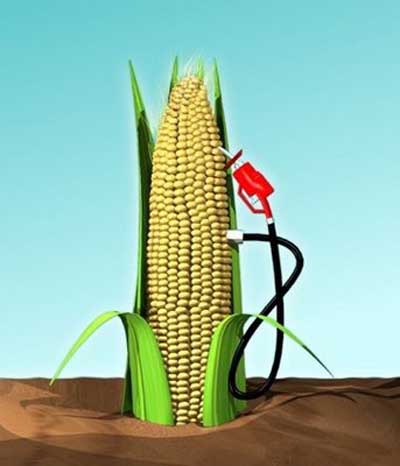
How could this be? I don’t know about you, but I don’t eat a lot of corn. Maybe once a month at most, and usually in the form of popcorn, but that’s it. Why would we dedicate almost 100 million acres of U.S. land to this seemingly innocuous vegetable? Well, it turns out only two percent of corn is actually consumed by people. The rest is used for exporting to other countries, feeding animals, or producing gasoline. I was most intrigued by the production of ethanol using corn. Corn ethanol is the most widely used form of gasoline in the United States. There are two major issues regarding the use of corn for fuel: the amount of space it takes up and the greenhouse gas (GHGs) it emits.
The U.S. doesn’t have infinite space for farmland. About 800 million acres of land are arable, meaning they are used for agriculture. This means an eighth of farmland is being used exclusively for corn, most of which isn’t consumed. With the human population growing and projected to reach 10 billion by 2050, we need all the space we can get to feed people. Using an eighth of our arable land for corn is an extremely inefficient use of space.
In addition, corn ethanol emits a significant amount of GHGs, which create excessive heat in the atmosphere and have the effect of a blanket, causing rapid global warming and climate change. Although more environmentally friendly than petroleum-based gases, emitting about 50% less GHGs, corn ethanol still contributes significantly to total emissions. Growing corn is a major emitter of nitrous oxide from using nitrogen fertilizer. Nitrous oxide is over 300 times more potent than carbon dioxide, and agriculture is the source of around 80% of its emissions. If only used for feeding the human population, this staggering number is one thing. However, when we’re using a significant portion of crops grown to produce gasoline, which in turn emits more GHGs into the atmosphere, it creates a vicious cycle of massive carbon emissions.
Here’s what you can do to help: While not accessible to everyone, electric cars are a great alternative to using gasoline. It doesn’t have to be an expensive Tesla; many other cheaper car brands, like Nissan and Hyundai, sell affordable electric cars. Also, it can save money over time, as you don’t have to spend gas money!
 Eco-Lizzie
Leave a comment