I can’t remember the last time I wore makeup. I have absolutely no skincare routine, and I have probably worn perfume a maximum of three times in my life. However, my 11-year old sister’s room looks like a Sephora, an Ulta and a Bath and Body Works combined. Most of what she consumes online are product reviews for various trendy companies that make skincare and makeup products. Considering how prevalent ads (both disclosed and undisclosed) are on social media, I thought it might be interesting to look into how social media has impacted overconsumption, which has caused landfills to overflow with unused products.
When looking into how products are advertised, I came across an interesting point. Social media, especially largely visual platforms such as Instagram and TikTok have been known to have unhealthy beauty standards, especially for young girls. This can play a huge role in getting these young girls to buy these products. If most of your downtime is spent consuming pictures and videos of models with perfect skin urging you to buy their products, how could a young girl with understandably imperfect skin resist, even if they won’t ever use them all? In addition to explicit advertisements, various make-up and skincare brands can become popular on their own through product reviews, unboxing videos, GRWM (“get ready with me”) clips and other beauty care videos. These brands are pushed to young girls, making them want to buy these products to seem or feel trendier, prettier, or cooler, even if they won’t actually end up using them.
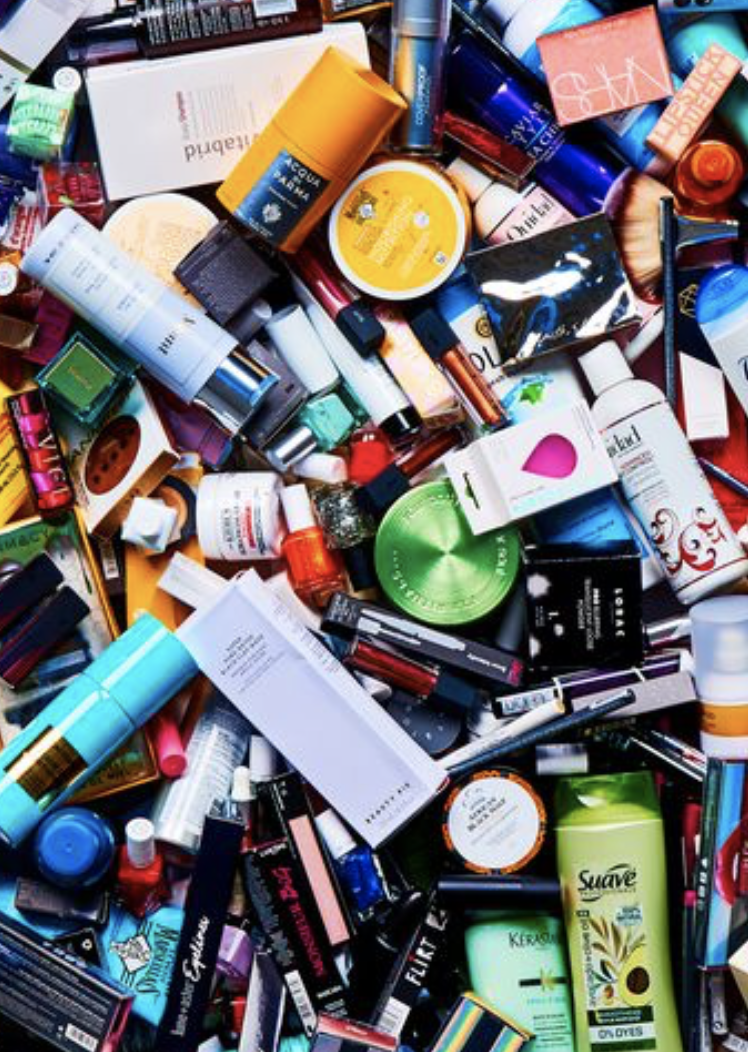
Buying large amounts of unnecessary products can take up a lot of space in landfills. According to the University of Connecticut, beauty packaging amounts to 120 billion units of trash each year, and 70% of it ends up in landfills. Also, in addition to the packaging containing plastic which ends up in landfills, the products themselves might be harmful to the environment. Certain products can contain chemicals that are harmful for aquatic ecosystems and sea life. If products with these chemicals are unused and thrown away, more of the harmful product will end up in bodies of water. Some of these chemicals include leachate, a liquid that comes from make-up and parabens and phthalates, which are synthetic chemicals that don’t break down easily.
–> Here’s one thing you can do today to help reduce unnecessary waste: Before you press buy when shopping online, think to yourself: Will I actually use this? Will this item be useful or will it just collect dust? Will I shove this product in my closet or in a drawer and never look at it again? If you find yourself realizing that this product won’t tangibly improve your life, don’t buy it! Your wallet and your planet will thank you.

 Eco-Lizzie
Leave a comment